Any fees for tuition?

When I hear the word tuition it makes my flesh crawl. Keeping this feeling deep in my heart, I have closely been following updates from the Quebec uprising.

“Quebec students mark 100 days of tuition protests,” reports AP

Tens of thousands of students marched through the streets of Montreal on Tuesday to mark 100 days since the movement against higher tuition fees began…The conflict has caused considerable social upheaval in the French-speaking province known for having more contentious protests than elsewhere in Canada.Retiree Claude Gravel, 61, said she was against the law seeking to calm down tensions after 100 days of protests…She said the tuition hikes would make educating her college student son hard on the family’s limited finances.

“Quebec students reject latest government offer to cut tuition fees,” states 680News.com

The government had already lowered the yearly increase, by offering to spread it out over seven years for an annual jump of $254, a move previously rejected by students.

Education Minister Michelle Courchesne’s new proposal would have reduced the yearly hike to $219 over seven years.   The original increase, which kicked off the dispute in February, was for $325 a year over five years — a move that would bring annual fees to about $3,800 in 2017.

At first I was sure that the very reason for the mass disobedience was a notorious tuitions, which were promised to be raised during the following five-seven years — up to 75% hike in tuition all together. Having painful experience of paying tuitions back, I felt I could have been one of those students, defending their right for affordable education.

Then came that second thought that people usually feel afterwords. Nah, I didn’t do something for which that “second thought” would be kicking me. Apparently, it was all about my inner I who sent the second thought to my brain warning me to compare tuitions in Quebec, the province of revolt, with tuitions in, say, Ontario, which is a relatively calm place to study. At that point in my pondering I couldn’t draw a picture of what a shocking discovery awaits me as I progressed in my research.

In order to visualize the problem I decided to visit the web sites of universities in English-speaking provinces, and universities in Quebec. The following is my findings.  Continue reading
Leave a comment

Filed under Uncategorized

My art, Nature vs Nurture

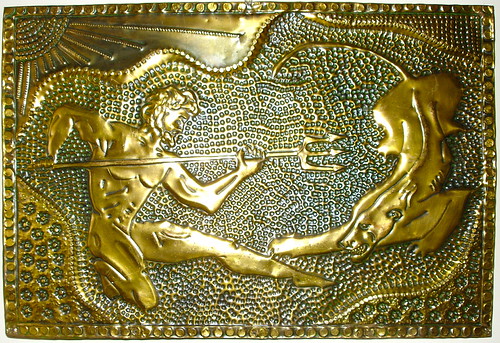
Welcome to ancient Rome where a trained man, a gladiator, fights a panther in an arena — what a horrible thing! Well, it’s probably not so horrible scene now as it was seen years and years ago when a writer of the blog was chiseling his piece of art. Please don’t judge the author too harshly for his naivë expression of the world. The author was young and impressible back then. He just wanted to be a part of a fight. Hence, the outcome of the disease. Enjoy.

my art

Leave a comment

Filed under Uncategorized

O’ Kanata: The best song ever!

It has taken me awhile to turn my face toward limitless heritage of my country. In retrospective, when I engaged in conversations with my friends about Canada’s culture, the first thought pop up in my mind was a unique culture of the First Nations. As far as I can perceive it, the issue of the First Nations is the only one that is not being widely publicized in any mainstream media; it’s hardly being covered in blogs as well.

Probably I should devote more time to writing on this exuberant topic because few people have an idea of how deeply touching the art of the aboriginal people is.

Meantime, we have no choice but admit that history of aboriginal peoples in Canada is unique and extremely compelling for both a typical academic and a man of the street – – they all would definitely find something that is near to their heart.

Before we go any further, let us enjoy an aboriginal version of Oh, Canada, Canada’s National Anthem. O’ Kanata is the best song ever!

Inuktitut

ᐆ ᑲᓇᑕ!
ᓇᖕᒥᓂ ᓄᓇᕗᑦ!
ᐱᖁᔭᑏ ᓇᓚᑦᑎᐊᖅᐸᕗᑦ.
ᐊᖏᒡᓕᕙᓪᓕᐊᔪᑎ,
ᓴᙱᔪᓗᑎᓪᓗ.
ᓇᖏᖅᐳᒍ, ᐆ ᑲᓇᑕ,
ᒥᐊᓂᕆᑉᓗᑎᑎ.
ᐆ ᑲᓇᑕ! ᓄᓇᑦᓯᐊ!
ᓇᖏᖅᐳᒍ ᒥᐊᑎᓂᕆᑉᓗᑎ,
ᐆ ᑲᓇᑕ, ᓴᓚᒋᔭᐅᖁᓇ!

Official English

O Canada!
Our home and native land!
True patriot love in all thy sons command.
With glowing hearts we see thee rise,
The True North strong and free!
From far and wide,
O Canada, we stand on guard for thee.
God keep our land glorious and free!
O Canada, we stand on guard for thee.

In case you loved the singing, you are always welcome to visit a native place of the song — a site from where I shamelessly  borrowed the song. Cheers.

Leave a comment

Filed under Uncategorized

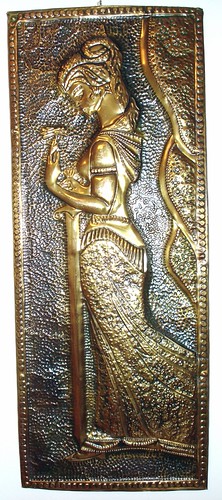
My Art, Woman with a Flower

Here you go. There is one other piece of masterpiece has arrived. I do not believe there are much words should be spoken describing the Women with a Flower — it’s all in front of you. Nevertheless, I would probably contribute one word to the bank of common knowledge.

I created this piece in memory of my first love with whom, as it’s commonly found, we separated in the season of our youth. I had begun this piece when we had still been like two peas in a pod, and finished it off soon after we broke up. Life is full of fun, eh?

My art, Woman with a flower

Leave a comment

Filed under Uncategorized

My Art, Skomorokh

Today we are about to leave Georgia and move to Russia, the country rich with the oldest ancestry of art.

The topic for today is a Russian joker — a skomorokh.

The skomorokhs (Sing. скоморох in Russian, скоморохъ in Old East Slavic, скоморaхъ in Church Slavonic) were medieval East Slavic harlequins, i.e. actors, who could also sing, dance, play musical instruments and compose most of the scores for their oral/musical and dramatic performances. The etymology of the word is not completely clear.[1] There are hypotheses that the word is derived from the Greek σκώμμαρχος (cf. σκῶμμα, “joke”); from the Italian scaramuccia (“joker”, cf. English scaramouch); from the Arabic masẋara; and many others.

[…]

The skomorokhs performed in the streets and city squares engaging with the spectators to draw them into their play. Usually the main character of the skomorokh performance was a fun-loving saucy muzhik (мужик) of comic simplicity. In the 16th–17th century the skomorokhs would sometimes combine their efforts and perform in a vataga (ватага, or big crowd) numbering 70 to 100 people. The skomorokhs were often persecuted by the Russian Orthodox Church and civilian authorities.

My art, Skomorokh, Russian joker

It’s true that skomorokhs were actors who played on different musical instruments — such as guslirozhok, or balalaika — in ancient Russia. In my incused piece of art, as a case in point, I portrayed skomorokh with balalaika.

Chewing over the topic of ancient Russian performers, it’s really hard to avoid a comparison of skomorokhs with yurodivy, who were a sorta Russian preachers in medieval Russia.  The similarity between the two is the essence of their job: both skomorohs and yurodivy were quick at telling an inconvenient truth about the current affairs in Russia.

The yurodivy (Russian: юродивый, yurodivy) is the Russian version of Foolishness in Christ (Russian: юродство, yurodstvo or jurodstvo), a peculiar form of Eastern Orthodox asceticism. The yurodivy is a Holy Fool, one who acts intentionally foolish in the eyes of men. The term implies behaviour “which is caused neither by mistake nor by feeble-mindedness, but is deliberate, irritating, even provacative.

[…]

Some characteristics that were commonly seen in holy fools were going around half-naked, being homeless, speaking in riddles, being believed to be clairvoyant and a prophet, and occasionally being disruptive and challenging to the point of seeming immoral (though always to make a point).

In their seemingly obvious resemblance, however, skomorokhs and yurodivy had distinct dissimilarities between them. One of the most vivid distinctions is that skomorokhs could be decapitated for their performances; yet, yurodivy were untouchable — and for good reason, they were perceived as the voice of the Lord.

emphasis mine

Leave a comment

Filed under Uncategorized

On-Line or not to line, that is the question

Being preoccupied with the idea of moving to the online banking, I set off to exploring the Big Mac Big Five‘s polices. The first four banks, Toronto-Dominion Bank, Bank of Nova Scotia, Bank of Montreal, and Royal Bank of Canada, offered much about the same security guarantees to poor souls, the “online banking surfers.” Going through all those four-banks-guarantees I was appeased by what I had discovered, and I could close my eyes and befriend any of those banks for their kind promises.

Then I got a strike between wind and water.

My hangover cure arrived in the form of Canadian Imperial Bank of Commerce — the place where my sensitive soul was taken aback. CIBC was the fifth bank I had to cross over in order to reach that sweet feeling of a total protection on-line, in case I decided to rush toward signing an agreement in the nearest bank.

The following is a straightforward derivative of the security guarantees copied from the web sites of the big five Canadian banks. Continue reading

Leave a comment

Filed under Uncategorized

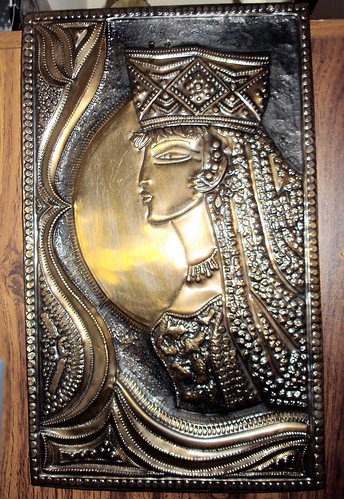
My Art, Tamar of Georgia

My piece of art but I depart
♥♥♥

Welcome to my virtual art gallery which will probably consist of … a couple of pieces I punched in my previous life. Years have flied since I kissed the hobby goodbye. Yet, when people see my “masterpieces” they always ask me to extrude something for them, on crying of whom I always react with a polite form of denial. People keep asking; I keep turning everything into a joke…

Well, today we are going to learn about Tamar of Georgia, a Queen of Georgia centuries ago.

Tamar (Georgian: თამარი, also transliterated as T’amar or Thamar) (c. 1160 – 18 January 1213), of the Bagrationi dynasty, was Queen Regnant of Georgia from 1184 to 1213. Tamar presided over the “Golden age” of the medieval Georgian monarchy. Her position as the first woman to rule Georgia in her own right was emphasized by the title mep’e (“king”), commonly afforded to Tamar in the medieval Georgian sources.

My Art, Tamar of Georgia

I was inspired to create this piece by one of the Georgian masters who taught me Art mixed with Georgian philosophy and peppered with its history. It was great time. I learned lots of stuff which I keep chewing over and over again, throughout the years. Eventually I departed from the life of an artist; the daily routine of worldly life won the battle over my soul — I was pardoned/punished? by kicked out from The Celestial Empire straight down to Earth, where I have happily been dwelling ever since.

1 Comment

Filed under Uncategorized

Maple dreams come true

As far as I can remember, I had always dreamed about taking part in the maple ceremony of sucking the maple sap from a maple tree.This year my dreams came true — I was blessed with visiting The Kortright Centre for Conservation, which is one of few farms in Ontario where maple syrup is collected from sugar maple trees.

The procedure of collecting maple syrup is plain:

  1. tap the sugar trees
  2. collect maple sap
  3. evaporate water from the sap
  4. enjoy your syrup

Production methods have been streamlined since colonial days, yet remain basically unchanged. Sap must first be collected and boiled down to obtain pure syrup without chemical agents or preservatives. Maple syrup is made by boiling between 20 and 50 litres (5.3 and 13 US gal) of sap (depending on its concentration) over an open fire until 1 litre (0.26 US gal) of syrup is obtained, usually at a temperature 4.1 °C (7.4 °F) over the boiling point of water. Syrup can be boiled entirely over one heat source or can be drawn off into smaller batches and boiled at a more controlled temperature. (emphases Alex’s)

While meandering along the sugar bushes, I had a neat idea of setting up the maple business. What you hafta do in this business, I thought, is strictly following the above mentioned the four-step routine. It was my maple dream which had no chance to come true — the instructor evaporated it from my mind. She told me that if I were about to become a maple fat cat, I would have to wait for 40! years, at least, to reap the very first maple harvest — that is how long it takes the sugar trees to grow.

Maples are usually tapped beginning at 30 to 40 years of age. Each tree can support between one and three taps, depending on its trunk diameter. The average maple tree will produce 35 to 50 litres (9.2 to 13 US gal) of sap per season, up to 12 litres (3.2 US gal) per day. This is roughly equal to 7% of its total sap. Seasons last for four to eight weeks, depending on the weather. During the day, starch stored in the roots for the winter rises through the trunk as sugary sap, allowing it to be tapped.Sap is not tapped at night because the temperature drop inhibits sap flow, although taps are typically left in place overnight.Some producers also tap in autumn, though this practice is less common than spring tapping. Maples can continue to be tapped for sap until they are over 100 years old.

That is basically all that I was about to share with you. If you want to witness some sugary pictures of the trip, you are welcome to click on any number down there — each number leads to a picture from the trip. Bye for now.

Leave a comment

Filed under Uncategorized

And the people eventually gone

Simcha Rabba, Simcha Rabba, Aviv Hee’gee’ah, Pesach Bah!
♦♦♦
[rough translation]
There’s a Great Joy, There’s a Great Joy
Spring has come, Passover has come!
♦♦♦

Many people all over the world are blessed of holding both Jewish and Christian holidays within one week. Today we meet Passover, the most important, in my opinion, day for all Jewish people.

The word Pesach [HEB], comes from a Hebrew word PaSaCH which means PASSED OVER which is a literal translation of Passover.

I am sure that the history of Passover is widely publicized in tones of media sources. Being exposed to those stories in the media on almost on a yearly basis, I have found that they are pretty lengthy and indigestible, in a sense. Thus I came to my own short interpretation of the holiday.

To make a long story short, Jews were living in Egypt and cried out to the local Pharaoh that he would let the people go, as it described in the following song.

Needless to say that Moses‘s appeals to the Pharaoh weren’t heard — the ruler despised the Jewish longing for freedom. Then Jews had nothing to do but complain to God about the injustice. Being a Jewish God, the God sent 10 plagues to Egypt, on the spur of the moment.

Having tested nine plagues out of set of the ten, Pharaoh hadn’t been convinced of the reason why he should have allowed Jews to go. At that point both Jews and God were sick and tired of the Pharaoh’s stupid obduracy — the Pharaoh wasn’t aware that God were with Jews. So, when all nine plagues failed to bring to reason that pour Pharaoh, God had reluctantly to come down to killing all firstborns in Egypt. It’s important to mention that playing on the side of the Jews, God revealed to them a catch of the last plague — the tenth one.

This is what the LORD says: ‘About midnight I will go throughout Egypt. Every firstborn in Egypt will die, from the firstborn son of Pharaoh, who sits on the throne, to the firstborn of the slave girl, who is at her hand mill, and all the firstborn of the cattle as well. There will be loud wailing throughout Egypt—worse than there has ever been or ever will be again. (Exodus 11:4-6)

God told Moses that in order to all Jewish firstborns to survive the Jews had to mark lamb’s blood on their doorposts so that Angel of Death would PASS OVER that home. Jews did what God told them and, subsequently, escaped the blind rage of God in His 10the plague; the Pharaoh was a moron and got what he paid for.

Not sooner had the Pharaoh changed his mind and let that people go before he tasted the tenth plague.

Eventually the people gone… That’s basically the story of Passover.

The joy of the holiday comes from the fact that Passover was a crucial event in Jewish history; it was a day of birth a Jewish nation. In my view, Passover is one of few Jewish holidays when both religious and secular Jews draw round the table.

Bonus: Listen to the two-part podcast chewing over the exodus of Jews from Egypt.

Leave a comment

Filed under Uncategorized

Life without pennies

The very question of today tonight is what our life will look like without penis pennies.

The government of Canada has announced that Canadian one-cent coin, the penny, will be eliminated soon. With the penny’s demise we all are in danger of losing the vernacular of Canada.

In the past 15 years it’s lost its copper, its usage and its cost-effectiveness – the butt of jokes and bane of neat freaks well before its end became official in Thursday’s federal budget.

True, If the penny is gone today what we are about to put in, had the need arisen? In order to get my mind right I have to clarify what we suppose to put in when we are in need to express our opinion? Up till now I’ve been pretty comfortable with sticking my two cents in whenever I wanted. So if the penny has made a history, should we put in two Loonies and/or one Toonie instead of two cents?

Leave a comment

Filed under Uncategorized